
The End of Hiring Christmas Light Installers? Why Permanent Lighting Is Taking Over
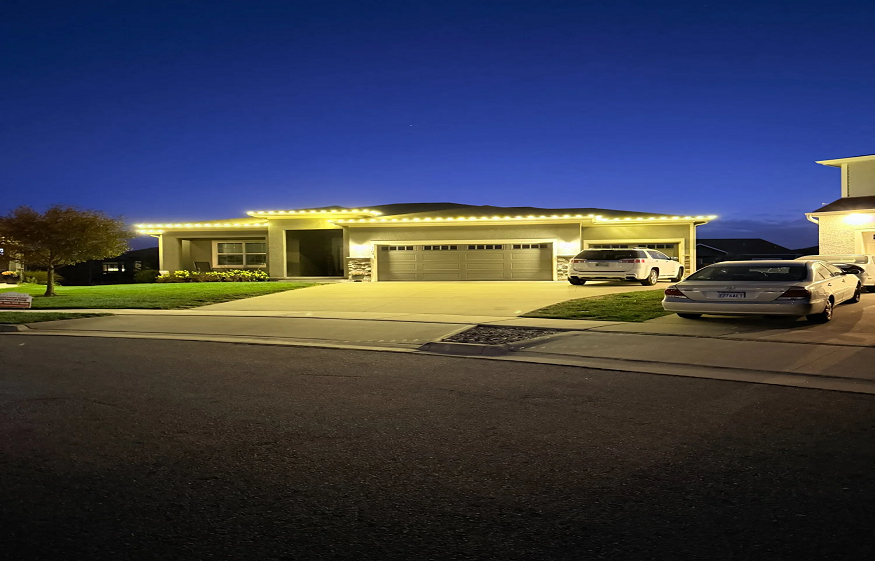
Every fall, a familiar parade of trucks rolls through suburban neighborhoods. Crews in matching shirts pull up to driveways with ladders strapped to the roof, spend a few hours stapling colored strands to rooflines, and hand the homeowner an invoice somewhere between $400 and $1,200. Two months later, the same trucks come back to take it all down. Multiply that by ten or fifteen years, and the average homeowner has quietly spent the price of a used car on temporary lights they only enjoy for six weeks at a time.
That math is starting to catch up with people. A growing number of homeowners are skipping the seasonal installer entirely and switching to permanent outdoor lighting — discreet LED tracks installed once under the eaves and controlled year-round from a phone. Companies like First Response Lights install systems that disappear into the trim during the day and turn the entire home into a programmable canvas at night. White for everyday curb appeal, red and green for Christmas, orange and purple for Halloween, school colors on game day — all without a single trip up the ladder.
It’s one of the fastest-growing categories in residential exteriors right now, and it’s worth understanding why before you write another check to a holiday lighting company.
The shift in how homeowners are thinking about exterior lighting
Permanent lighting used to be marketed almost entirely as a holiday convenience. That framing missed the point. Once homeowners actually live with a system for a few months, the holiday use case becomes secondary. The real value turns out to be the everyday warm-white “architectural” mode — the same kind of soft uplighting you’d see on a high-end custom home, except built into the eaves and on a schedule.
Suddenly the house looks finished after dark. The roofline is defined. The front entry feels welcoming instead of dim. Neighbors notice. And the holiday colors, when you eventually flip them on in late November, feel like a bonus rather than the main event.
Read More: Why Finding a Good Roofer Is Still So Hard — And What’s Changing
Running the numbers
The sticker price of a permanent system is the part that stops most homeowners in their tracks. A professional install on an average single-story home usually lands somewhere between $2,500 and $5,000. Larger or two-story homes can climb to $6,000 or more. That feels steep until you put it next to the alternative.
A typical professional Christmas light install runs $500 to $900 for a modest home, with takedown either bundled in or billed separately. Add storage, replacement strands, the occasional ladder rental, and the value of the weekends you’d otherwise lose doing it yourself, and the annual cost is real money. Over a ten-year window, most homeowners spend more on temporary lights than they would have on a single permanent installation — and at the end of those ten years, they own nothing.
Permanent systems also tend to come with five to ten year warranties on the LEDs themselves, and the LEDs are rated for tens of thousands of hours of use. The break-even point usually arrives somewhere in years three to five.
What separates a good install from a bad one
This is where homeowners need to slow down. The technology behind permanent lighting is fairly mature at this point, but installation quality varies wildly. The difference between a clean install and a sloppy one is the difference between a system that vanishes into your trim and a system that looks like a bike reflector strip glued to your house.
A few things to look for when you’re getting quotes:
The track should be hidden under the drip edge. Good installers tuck the aluminum channel up underneath the trim so it’s not visible from the street in daylight. Lazy installers surface-mount it on the fascia, and you’ll see it every time you pull into the driveway.
Ask about the brand. The market has consolidated around a handful of established names — Jellyfish Lighting, Trimlight, and Govee are the ones most homeowners run into during research. They differ in app reliability, LED density, warranty terms, and how the channel itself looks during daytime. There’s no universally “best” one, but there are meaningful differences worth comparing.
Look at daytime photos of past work. Anyone can take a glamour shot at night when the house is glowing. The real test is whether the system disappears in daylight. If an installer can’t show you photos of finished homes in full sun, that’s a red flag.
Ask who handles warranty service. Some installers are dealer-installers who hand off warranty claims to the manufacturer. Others handle service in-house. The second option is almost always faster when something goes wrong.
Read More: Dive In: How to Choose the Perfect Pool Shape and Size for Your Melbourne Home
A few things to consider before committing
Permanent lighting isn’t right for every home. If you’re planning to repaint or redo your fascia within a year or two, wait — you don’t want to install a track and then immediately work around it. If you’re in a strict HOA, double-check the rules first. Most HOAs allow these systems because they’re invisible during the day, but a few have written restrictions on colored exterior lighting that you’ll want to read carefully.
Also worth noting: the colored holiday modes are a lot of fun for the first few weeks, but most homeowners settle into running warm white most of the year and saving the color shows for actual holidays. If you’re picturing a constantly changing rainbow display, that’s not really how people end up using these systems in practice.
The bottom line
The annual ritual of hanging Christmas lights is starting to feel like the home improvement equivalent of paying to develop film — a tradition that made sense for decades but has quietly been replaced by something better. If your last December weekend was spent on a ladder, or writing a check to someone else who was, it’s worth at least getting a quote on a permanent system before next holiday season comes around.