
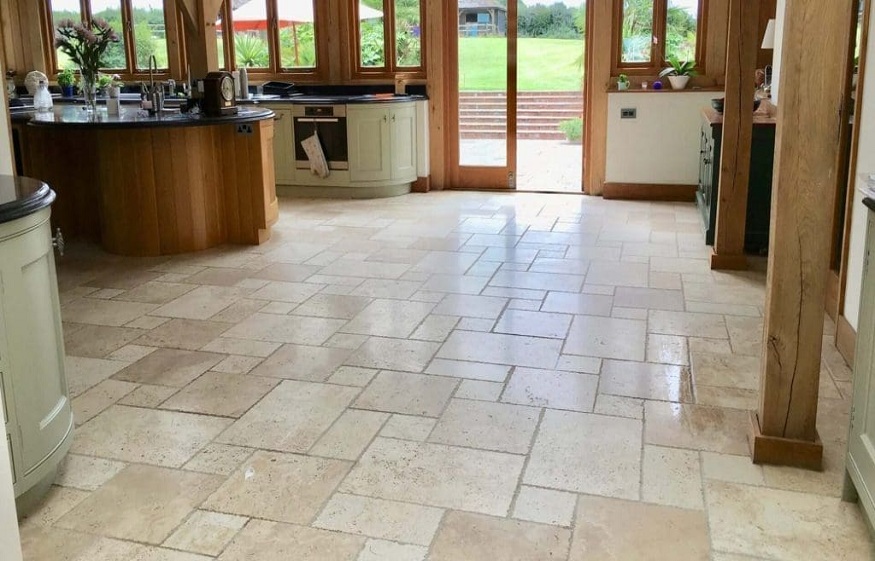

Floor selection is a technical choice. It has long-term effects on durability and maintenance. Your choice determines how each room will work under everyday conditions.
Aesthetic preference is important. But it must come after the function.
Below, we will explain the key aspects to consider. This way, you will minimize the chances of early wear, expensive replacement, or poor design results.
Assess the usage patterns
Begin by determining the use of each space. Some areas see a lot of traffic, like:
- Entryways
- Corridors
- Kitchens
- Living rooms.
They demand materials with high wear resistance. Hardwood may show scratches over time. But tile or vinyl tends to hold up better under constant movement.
Some spaces experience low traffic, like the:
- Bedrooms
- Study rooms
- Basements
These allow for softer or more comfort-focused options.
Do not choose based on appearance alone. You should align durability ratings to the actual application.
Consider environmental conditions
Some areas are prone to dampness. This includes:
- Bathrooms
- Kitchens
- Basements
In these regions, it is more dependable to use water-resistant or waterproof materials like:
- Porcelain tile
- Sealed concrete
- Vinyl
Avoid flooring made of wood. It can swell or warp. Unless well treated.
Do not consider only the exposure to visible water. You should also determine the humidity rate throughout the year.
Evaluate maintenance requirements
Various materials require varying degrees of maintenance. Certain surfaces need regular:
- Sealing
- Polishing
- Special cleaning agents.
Others can be maintained with basic:
- Sweeping
- Mopping
- Vacuuming
For example, natural stone flooring provides durability. It is also stunning.But it may need to be sealed from time to time. This prevents moisture uptake and stains.
Read More: Urban Residential Architecture Shaped by Efficiency, Comfort, and Sustainability
Know the floor’s requirements in advance. Consequently, you will choose one that fits your time and effort.
Balance comfort and practicality
The materialdetermines how a spacefeels underfoot.
Think of hard floors such as tile and concrete. They are durable. But they are cold and stiff. Particularly in the cooler climates.
There are softer alternatives like carpet. They can be warmer and have a cushion effect. But theyharbor allergens and wear out more easily.
You need to think about the possibilities of:
- Standing up long hours
- Walking barefoot
- The ease of cleaning.
You can also use different materials for various rooms. This gives a more satisfactory balance.
Factor in installation and subfloor conditions
Not every material can be used on all subfloors. Some factors can compromise durability, like:
- Poor installation
- Uneven surfaces
- Moisture
- Structural constraints.
Certain materials need professional installation. Others are more apt at DIY projects.
You should also budget for preparation costs. You may need to:
- Level the ground
- Use moisture barriers
- Install underground heating, etc.
These modifications can be costly.
Consider the long-term value
This is a long-term investment. Therefore, the cost must match its lifespan and performance.
Read More: Durability Meets Design: What Today’s Renovators Are Looking For
Less expensive materials could need to be replaced earlier. This would raise the total costs. Higher-quality options often provide better durability. This adds to your property’s resale value.
Do not look at the upfront cost only. You should consider how much it costs per year of usage.
Last words
Pay attention to the above factors. This way, you can choose a floor that fulfills both practical and design objectives.

[…] Read More: KEY THINGS TO KEEP IN MIND WHEN CHOOSING A FLOOR FOR YOUR HOME […]