
Why O’Fallon Homeowners Should Switch to a Tankless Water Heater
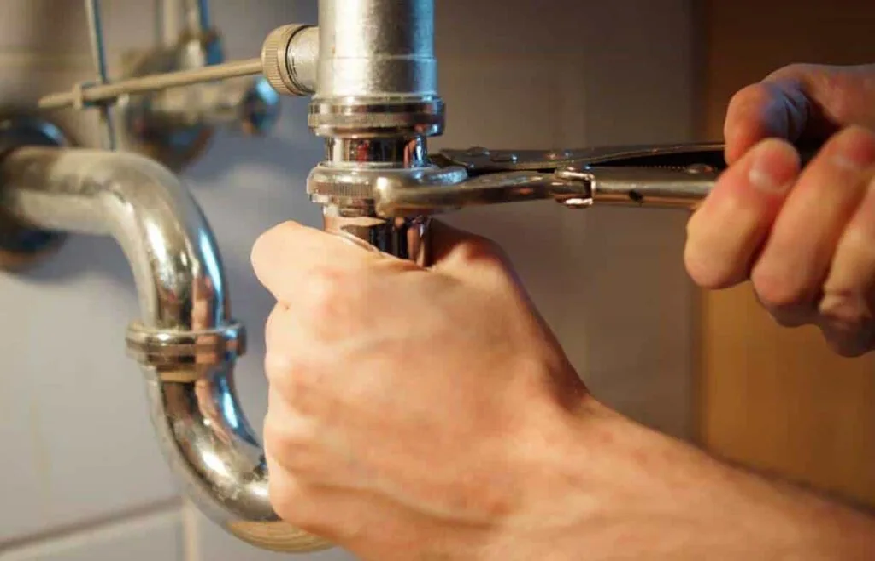
Homeowners in O’Fallon, Missouri take pride in their properties. But many residents here do not pay much attention to their water heaters. Those who are still relying on a conventional storage-tank unit may be losing money every month without knowing it. Thankfully, they can avoid this by investing in tankless water heaters. If you are ready to make the switch, check out hosackplumbing.com to connect with the right professionals who can help you with the installation. Below are reasons people in the city should invest in tankless water heaters:
O’Fallon’s Hard Water Is Quietly Destroying Their Tank Heater
According to the City of O’Fallon’s Water and Sewer Department, the local water hardness ranges from 100 to 170 parts per million (6–10 grains per gallon). Some water quality analyses of the broader St. Charles County region place certain groundwater sources even higher.
Hard water causes mineral scale to build up inside storage tanks, coating heating elements, and reducing efficiency. A traditional water heater already struggles with standby heat loss. This inefficiency increases because of scale buildup from O’Fallon’s hard water. Homeowners dealing with hard water can face the following issues:
- Water heater efficiency losses up to 29%. The water heater requires early replacement every 6–8 years, instead of the standard 12–15 years.
- Increased energy bills of $250–$400 per year. This is due to reduced appliance efficiency from mineral deposits.
- Plumbing maintenance costs of $300–$600 annually. This is tied to scale-related wear on pipes and fixtures.
- Appliance repair costs of $600–$1,000 per year across multiple household systems. These are affected by mineral buildup.
Tankless water heaters have no large storage tank for scale to coat. Their compact heat exchangers are easier to flush and descale during routine maintenance.
Read More: Urban Residential Architecture Shaped by Efficiency, Comfort, and Sustainability
The Energy Savings Are Significant
Switching to a tankless system delivers great financial benefits. These units heat water on demand, eliminating standby heat loss. The U.S. Department of Energy estimates that homes using 41 gallons or less of hot water per day can be 24% to 34% more energy efficient with a tankless model compared to a conventional tank. Even households with higher consumption typically see efficiency gains of 8% to 14%.
Longer Lifespan, Lower Long-Term Cost
Most tankless water heaters last more than 20 years, with many reaching 25–30 years when well-maintained. Traditional tank models typically fail within 10 to 15 years, even sooner in hard-water areas like O’Fallon.
The total installed cost of a tankless system ranges from $3,000 to $6,500, compared to $1,700 to $3,200 for a conventional tank unit. But tankless systems typically reach break-even within 11 to 14 years.
Space and Comfort
Tankless water heaters are compact and wall-mounted, freeing up floor space in utility rooms, basements, and garages that conventional 40–80-gallon tanks have traditionally occupied.
Read More: Durability Meets Design: What Today’s Renovators Are Looking For
In addition, tankless systems deliver a continuous supply of hot water without the risk of “running out” that tank users experience during peak morning hours. This is a quality-of-life upgrade for families with multiple bathrooms.
Why Professional Installation Is Non-Negotiable
Tankless water installation involves gas line sizing or electrical panel upgrades, proper venting configuration, and flow-rate calculations specific to your household’s demand. A licensed plumber from Hosack Plumbing Heating & Cooling brings significant contributions to a tankless installation:
- Correct unit sizing. A qualified plumber evaluates your household’s peak flow rate and selects the appropriate capacity.
- Infrastructure assessment. Approximately 60% of tankless installations require electrical panel upgrades costing $800 to $2,500. A professional identifies these needs upfront.
- Venting and gas line compliance. A licensed plumber ensures the installation is fully code-compliant.
- Hard-water preparation. A knowledgeable plumber will recommend appropriate pre-treatment or a compatible water softener to protect the unit and preserve its efficiency over time.
- Warranty protection. Most manufacturers require professional installation to honor warranty claims.