
Few home improvement decisions carry the same combination of excitement and complexity as installing a backyard pool. The showroom renders look effortless — a gleaming rectangular pool set against manicured landscaping, bathed in afternoon light. The reality of getting there involves a surprisingly involved set of decisions, and the choices you make early in the process will shape how you use and enjoy the pool for decades. For Melbourne homeowners specifically, local climate, block characteristics, council regulations, and lifestyle expectations all feed into what makes a Fibreglass pool in Melbourne genuinely work for a given property. Getting the shape and size right from the start is far more valuable than any feature or finish you might add later.
Start With the Block, Not the Brochure
The single most common mistake Melbourne homeowners make when planning a pool is starting with a desired shape or size before they have properly assessed what their block will actually accommodate. Pools installed on unsuitable sites — too close to boundaries, over easements, in conflict with existing drainage lines or tree roots — create problems that no amount of good design can fully resolve.
Read More: How to Choose Slip-Resistant Pavers for Safer Outdoor Areas
Before you look at a single product catalogue, walk your backyard with a tape measure and a clear head. Note the distance from the house to the rear boundary, the location of any easements or services, the position of existing structures like sheds or pergolas, and the direction the yard faces. In Melbourne, north-facing backyards receive significantly more sun across the year than south-facing ones — a factor that directly affects how warm and usable the pool will be without supplementary heating.
Council setback requirements vary across Melbourne’s local government areas. Generally, pools must sit a minimum distance from property boundaries, and in some areas heritage overlays, vegetation overlays, or flooding overlays impose additional constraints. Engaging a pool builder early in the process allows these site-specific constraints to inform the brief rather than derail it.
Understanding How Pool Shape Affects Function
Pool shape is not merely aesthetic. It determines how the pool is used, how it fits within the broader landscape, and in some cases, how efficiently it can be maintained.
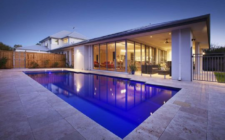
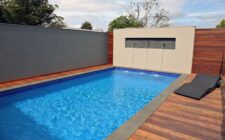
Rectangular pools are the enduring default for good reason. They maximise usable swimming area relative to total pool volume, they accommodate lap swimming, they are straightforward to cover with a blanket or safety cover, and they suit the clean lines of contemporary Australian residential architecture. For Melbourne families with children who will actually be swimming lengths, training for school sport, or playing structured pool games, the rectangle delivers more functional value per square metre than any other shape.
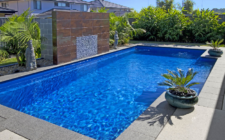
Freeform pools — those with curved, organic outlines — create a more naturalistic, resort-like atmosphere and can be an excellent choice where the pool needs to work around an existing landscape or respond to an irregularly shaped yard. They tend to require more thought around covering and safety compliance, and the curved walls can complicate some cleaning and maintenance tasks. The trade-off between aesthetics and practicality is real, but for many homeowners the visual result is worth it.
Lap pools are worth considering seriously for Melbourne’s narrower suburban blocks. A pool that is 3 to 3.5 metres wide and 12 to 15 metres long can fit into spaces where a conventional pool would be impossible, and it serves fitness-oriented households extremely well. They have become increasingly popular in Melbourne’s inner suburbs — Fitzroy North, Northcote, Hawthorn — where deep but narrow blocks are common and outdoor space is at a premium. A well-designed lap pool with a modest deck and thoughtful landscaping can transform even a constrained yard into a compelling outdoor retreat.
Plunge pools occupy the other end of the size spectrum. Compact by design, they prioritise relaxation and cooling over lap swimming or active play. For households without young children, or for properties where outdoor space is genuinely limited, a plunge pool can be a highly satisfying solution. Running costs are lower, heating a smaller volume of water is more efficient, and the design options available in a compact footprint have expanded considerably with the growth of the fibreglass pool market.
Sizing the Pool to Your Household’s Actual Needs
There is a persistent tendency to overestimate how much pool you need. Larger pools are appealing in the planning phase, but the ongoing costs of chemicals, heating, and maintenance scale with volume. A pool that serves your household’s genuine usage patterns is almost always the better investment.
A useful starting framework: for a family with school-aged children primarily using the pool for recreational swimming and water play, a pool in the range of 7 to 9 metres long and 3.5 to 4 metres wide provides ample space without unnecessary operating costs. For households interested in fitness swimming, 12 metres represents a practical minimum for meaningful lap work. For couples or households seeking a cooling retreat rather than an activity space, a plunge pool in the 4 to 6 metre range deserves serious consideration.
Melbourne’s climate is another honest sizing consideration. Unlike Sydney or Brisbane, Melbourne does not offer a year-round swimming season without heating. The pool will genuinely be used for perhaps five to six months of the year unless you invest in a quality heating system and a pool cover to manage heat retention. A smaller, well-heated pool used consistently is a better outcome than a large, cold pool that sits idle for much of the year.
Integrating Shape and Size With the Broader Outdoor Space
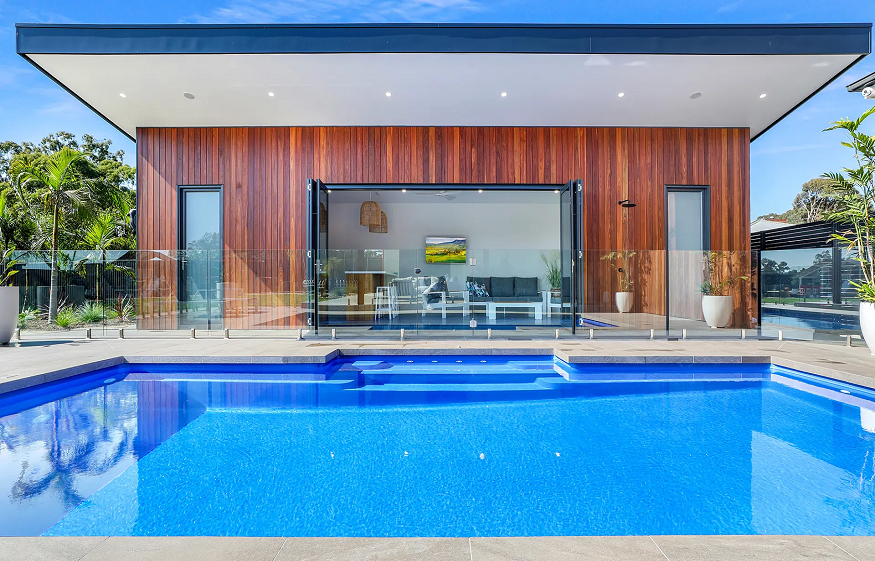
A pool does not exist in isolation. The most successful outdoor spaces treat the pool, the deck, the garden, and any covered entertaining area as a single integrated design. When planning pool dimensions, always consider how much deck space the remaining yard will accommodate — as a general guide, deck and surround area should be at least equal to the pool surface area to allow comfortable movement and furniture placement.
Read More: maximising-small-backyards-plunge-pool-design-ideas-for-gold-coast-homes/
Fencing is a non-negotiable element of any residential pool in Victoria, governed by the Building Regulations and the Australian Standard AS 1926. The position and design of pool fencing should be factored into the overall space planning from the outset, not retrofitted around a completed pool and deck. A thoughtfully integrated fence line, using materials that complement the overall design, adds to the finished result rather than detracting from it.
Choosing the perfect pool for your Melbourne home ultimately comes down to honest assessment — of your block, your budget, your climate, and how your household actually lives. The pool that fits those realities will deliver more pleasure, more often, than the one that looked best in the brochure.